Seal Watching Tips
The
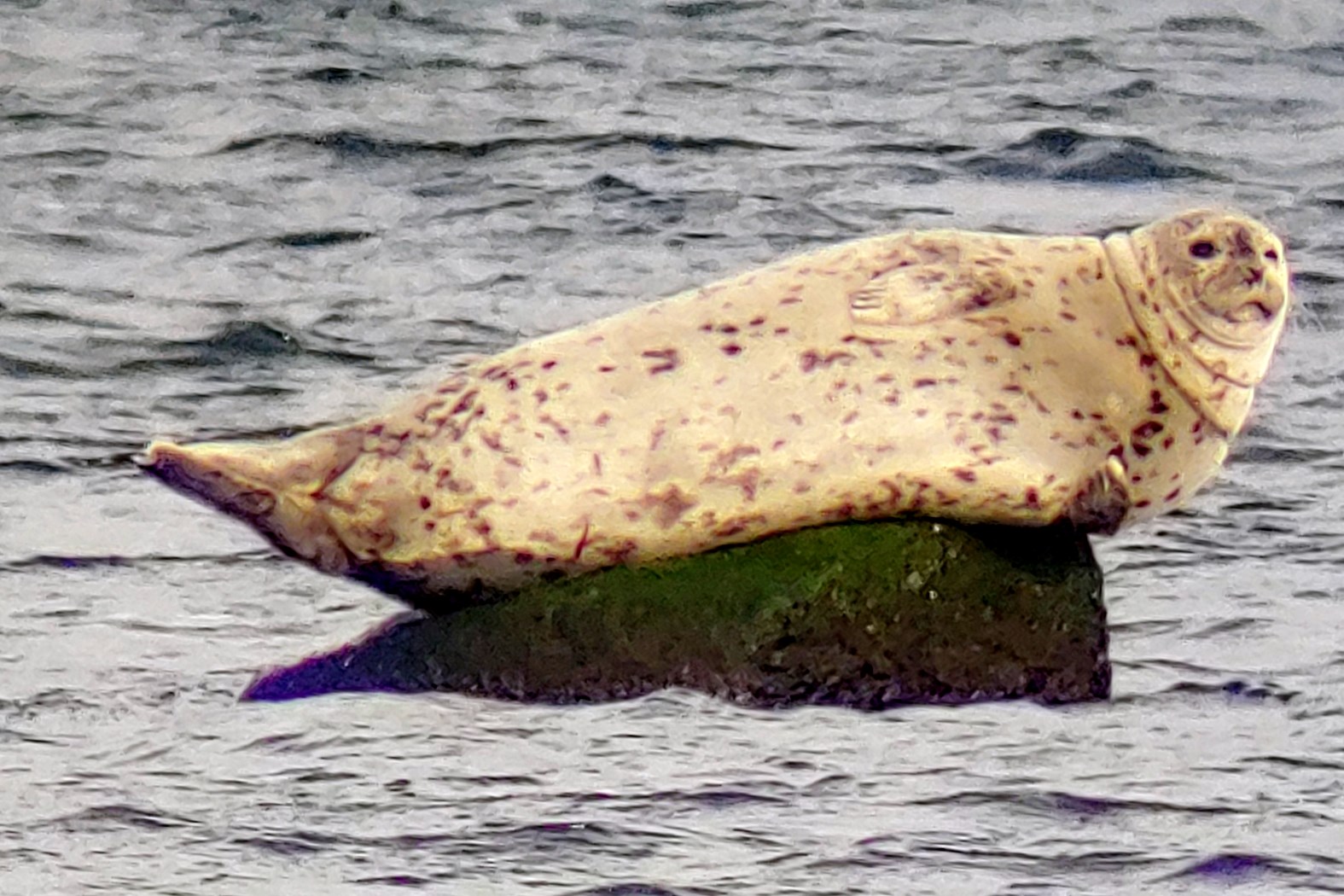
seals at Rome Point are happy with this haul-out site
because it is far enough from shore to allow them to feel
safe, even in the presence of people on land. The rocks
are over three hundred yards from shore, and at that
distance, the seals are not clearly visible to the naked
eye. It
is very important to bring a spotting scope or
binoculars with you on your hike to see the seals. Without binoculars or a scope, you are sure to
be disappointed that the seals are so far away.
A camera with a zoom lens is better than
nothing, but you will not get close-up photographs
without a scope or a very long camera lens. A cloudy day
or evening light is preferred for high-quality
photography, as the optical distortion caused by bright
sunlight reflecting off the water will be greatly
reduced. At Rome Point, morning light on a sunny day
will present challenges to photographers due to glare
and back lighting.
·
Check
out the signpost and the plaque at the trail head for a
map and information about the John H. Chafee State Park
and Nature Preserve.
·
When
in the parking area or especially if parked along busy
Route 1A, be sure to keep children and pets under close
control while you prepare for your hike.
·
Deer
ticks are present in the preserve and the threat of
contracting a tick-borne illness should not be taken
lightly. If you choose to explore the woodland trails, you
are advised to stay on the trail and to take adequate
tick protection precautions.
·
Trail
conditions can sometimes be poor due to ice, snow, or mud;
ice is often a problem after snow has gone through a
thaw/freeze cycle. A walking staff or ski poles can
be very helpful when the trail ices up. If the trail is in
bad shape, you may wish to consider returning another
day rather than risking an injury from a fall on the
ice.
·
To
avoid disturbing the seals, please approach the Rome Point
beach calmly and quietly. Harbor seals are sensitive
to human activity; this seems to be especially true when
large numbers of seals are hauled-out on the rocks on a
calm day.
·
Dogs
are welcome at Rome Point, bring your dog along for
a healthy exercise walk. Please pick up after your
dog.
·
Try
to keep dogs under control at all times. Bear in mind as
you approach Rome Point that your dog may encounter other
dogs, small children, bicycles, or horses and be prepared
to restrain your pet accordingly.
·
Please
do not play fetch with your dog on the beach at Rome Point
if seals are present; move south down the beach or
around the back to Bissel Cove to play with your dog.
·
The
seals are federally protected marine mammals.
Willfully disturbing or harassing seals is a
violation of federal law.
·
Choose
a location on the shore that is out of the wind for
comfortable seal viewing; sometimes moving only a few
yards can make the time spent watching seals much more
enjoyable.
·
Please
mind your cell-phone manners if you are close to other
groups of seal watchers.
·
Supervise
young children who are using sport optics on a sunny day
because even a quick glimpse of the sun through binoculars
can cause a serious eye injury.